
Cat6A Utp Patch Cord, Herbs & Spices
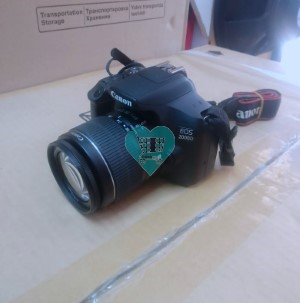
Canon EOS Camera 2000D
Canon EOS camera 2000D is an optical instrument used to capture still images or record moving images (video). They work by focusing light onto a light-sensitive sensor (in digital) or film (in traditional film), creating a visual representation of the scene. More: Here’s a breakdown of different aspects: Types: There’s a wide variety available, each designed for specific purposes and offering different features. Some common types include: DSLR (Digital Single-Lens Reflex): These use a mirror to direct light to either the viewfinder or the sensor. They are known for their versatility, excellent image quality, and interchangeable lenses. Mirrorless: These type don’t have a mirror, making them more compact and often faster than DSLRs. They offer similar or even better image quality and features compared to DSLRs, with a growing selection of lenses. Compact (Point-and-Shoot): These are small, easy-to-use with a fixed lens. They are convenient for everyday photography and travel. Bridge: These type bridge the gap between compact and DSLR/mirrorless types, offering a long zoom lens and more manual controls in a relatively compact body. Action: Small, rugged, and often waterproof type designed for capturing fast-paced activities and adventures. Instant: These cameras produce physical prints immediately after taking a photo. Smartphone Cameras: Integrated into mobile phones, these type offer convenience and increasingly sophisticated features, significantly impacting how people take photos. Medium Format types: Professional-grade type with larger sensors than full-frame cameras, known for exceptional image quality and detail. Film: Traditional types that use photographic film to capture images. 360 : Capture a 360-degree view of the surroundings, popular for virtual tours and immersive videos. Digital Cinema: Professional filmmaking tools with large sensors and advanced video recording capabilities. Security Cameras (CCTV): Used for surveillance and monitoring in various settings. Different types include dome, bullet, PTZ (pan-tilt-zoom), and night vision type. Drones with Cameras: Offer unique aerial perspectives for photography and videography. Key Features and Technologies: Modern cameras incorporate numerous technologies to enhance image quality, performance, and user experience. Some key advancements include: Sensor Technology: Improvements in sensor size, resolution (megapixels), and sensitivity (ISO) lead to better image quality, especially in low light. CMOS (Complementary Metal-Oxide-Semiconductor) sensors are now widely used due to their efficiency and speed. Image Processing: Powerful processors and advanced algorithms enable faster shooting speeds, better noise reduction, and various in-camera features like HDR (High Dynamic Range) and image stabilization. Autofocus (AF) Systems: Sophisticated AF systems with numerous focus points and tracking capabilities ensure sharp images, even of moving subjects. AI (Artificial Intelligence) is increasingly being integrated for more accurate subject detection and tracking. Image Stabilization (IS) / Vibration Reduction (VR): These technologies minimize camera shake, resulting in sharper images and smoother videos, especially at longer focal lengths or in low light. The Future of Camera Technology: The field of camera technology continues to evolve rapidly. Some potential future advancements include: Further miniaturization: Cameras may become even smaller and more integrated into everyday devices. Shutter buttonless cameras: Control through voice commands or gestures. “Smell-ography”: Capturing and recreating scents along with images. Unlimited battery power: Through solar or other innovative charging methods. More advanced AI: For even smarter automation and creative possibilities. Integration with other technologies: Seamless connectivity with 5G and the Internet of Things (IoT).
$ 90.16